FAQs
Are there things you will not address in SESSIONS ?
As I am not a trained professional in areas such as finance, law, medicine, or psychology, I do not offer advice in these fields and I will always recommend that clients seek out qualified professionals for any medical, legal, financial, or psychological matters.
My focus is on helping you explore your life path, decisions, and personal growth. If you’re unsure whether your question aligns with my practice, feel free to reach out, and I can guide you.
HOW Should I PREPARE FOR A TAROT COACHING SESSION ?
There isn’t much preparation needed, but getting into the right mindset can make a big difference. A couple of days before our session, take a moment to set a clear intention: what do you want to get out of this session? Whether it’s a one-off session or part of a series, having a clear intention will help you get the most value.
Feel free to share this intention with me—it really helps focus the cards on what’s most relevant for you.
Why do I need to pick a deck to work with ?
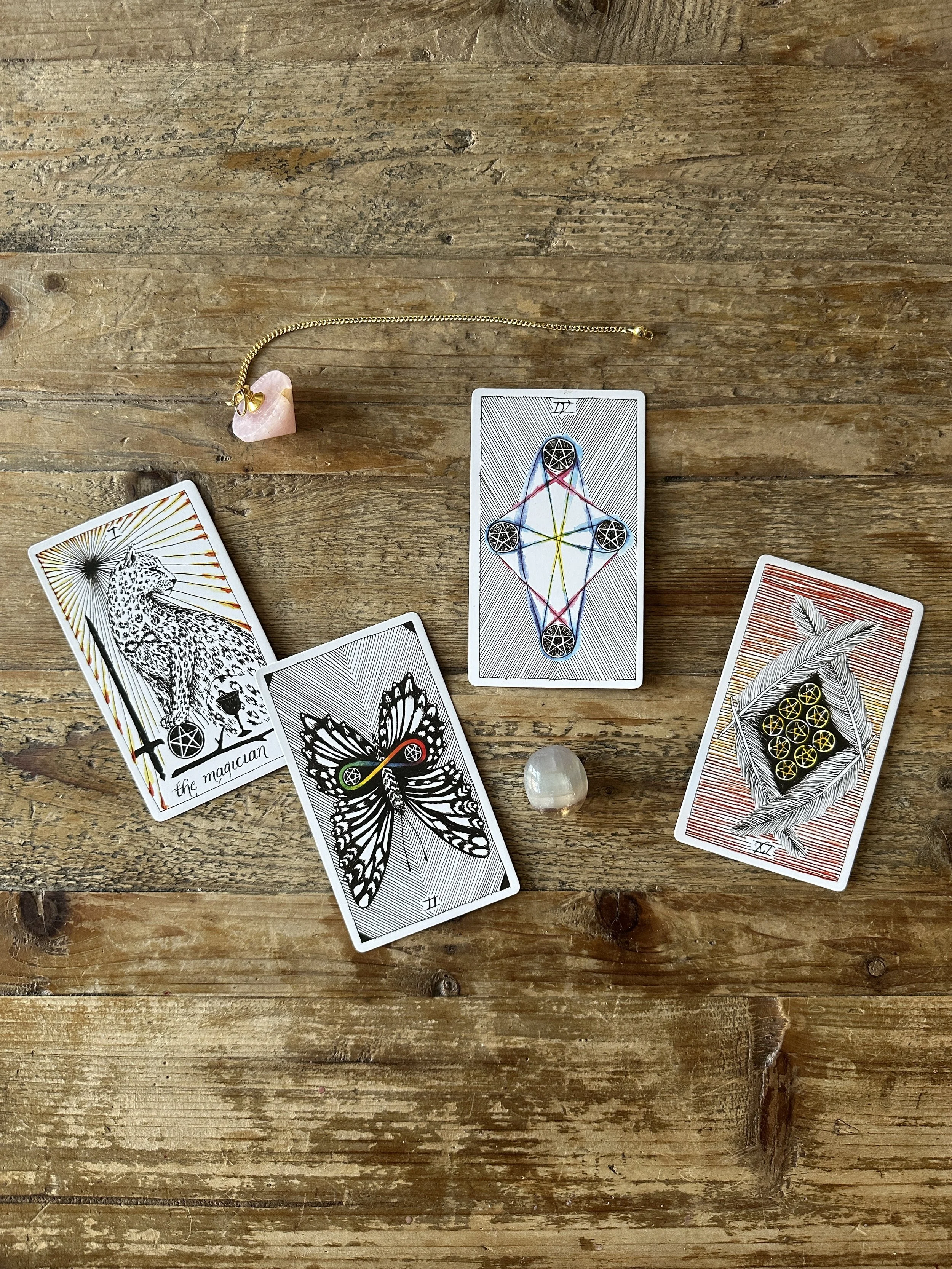
Imagery is essential in tarot—feeling a personal connection to the symbols and artwork can make the session more powerful. You can see images of the decks I have to choose from here.
To save time during our session, take a look and see if one speaks to you.
will I participate during the session ?
Tarot is a conversation, not just a one-way reading.
The more insight you share during the session, the more I can help interpret the messages in a way that is meaningful and relevant to you.
We will be co-creating the reading, in the sense that what you notice and see matters.
Remember you know your life 100× better than I do, so trust your intuition and how you feel about each card.
The feelings and thoughts that arise for you when seeing the cards are just as important as my knowledge of them.
What if I know nothing about Tarot?
You need NO prior knowledge of tarot or any of the cards before a coaching session. All you need is to be curious and open to the cards, and sharing how certain images, or cards make you feel. I am always here to help guide you with my knowledge of the cards.
TO BELIEVE OR NOT TO BELIEVE
Believe it or not, belief isn’t required!
You don’t need to believe in anything—even tarot itself—to experience the benefits of this incredible tool.
I’ve done Tarot Coaching for people who were skeptical told me they didn’t believe, and while some were surprised by the accuracy of the cards, they still brushed it off, they were still able to gain clarity and found the reading helpful for whatever they were navigating.
TIME IN TAROT
Timing in tarot is tricky ! The cards can indicate whether something is likely to happen in the short term, but what does "short term" really mean ? A week ? A month ? A year ? In hindsight, even a few years can feel like a short time—but when you're living it, it can feel much longer.
That’s why I usually don’t provide exact timelines or answer "when will I…" questions. Instead, my readings focus on guidance, clarity, and the steps you can take to move forward, rather than fixed dates. Tarot is about insight, not certainty in time.
How do you deal with negative information ?
The purpose of a session is to leave you feeling more confident, inspired, and empowered. That being said, I don’t “sugarcoat” messages just to make them sound pleasant—I believe in honesty, but always with care and intention.
Sometimes so-called “negative” cards will appear. These cards aren’t meant to be scary or discouraging; they show up to offer insight, validation, or guidance. They may highlight challenges or areas for growth, but they also provide the opportunity to move forward with greater awareness and strength. Read my commitment to you.
What should I do after a Session?
Like most self-healing practices, a tarot reading is just one part of the process—the real work and benefits often come afterwards. Tarot isn’t passive; its long-term impact depends on what you do with it. Insights may surface in dreams or unfold over time, but they deepen through the effort you put in—journaling, meditating, and self-reflection. The more you engage with the process, the more you will gain from it.
Did you study Tarot ?
I completed the Biddy Tarot Certification Program, in May 2023, and since then have been working with Natalie Rogers as a mentor. Find out more about my tarot background.